

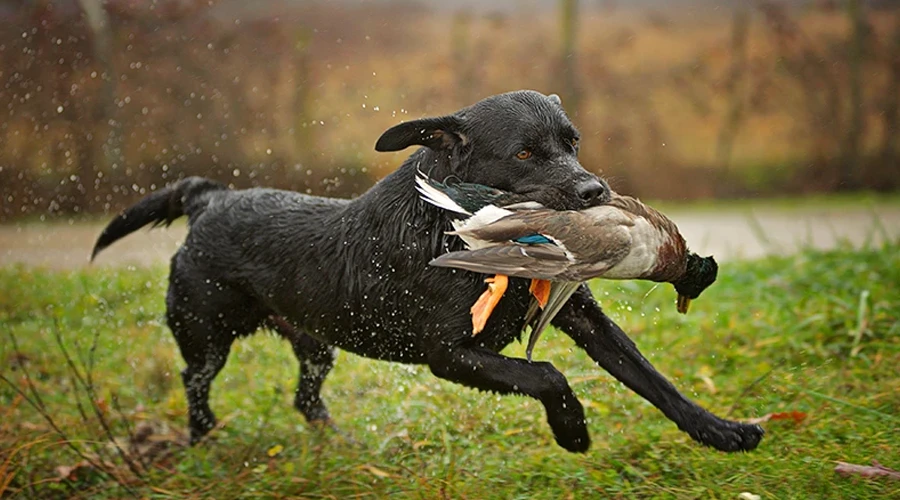
For hunters, a good dog is an essential, trusted partner. Whether you run a pointer across upland fields, rely on a retriever to carry heavy waterfowl out of icy water, use a spaniel to flush birds from cover, or follow a hound over rough terrain tracking game, your dog works hard every season.
Over time, that intense physical activity can take a toll on their joints. One of the most common long-term health issues in hunting dogs is arthritis, which can affect mobility, reduce endurance, and limit a dog’s working years.
Understanding arthritis in hunting dogs—and knowing how to recognize it early and manage it effectively—can help extend your dog’s career. Read on to learn more about the underlying cause of arthritis, why hunting dogs are at risk, how to recognize the signs, and what a newer treatment called Synovetin OA® can do to effectively manage the condition and help keep your dog in the field for many years to come.
What Is Arthritis in Dogs?
Arthritis is a degenerative joint disease caused by inflammation of the tissues that line the joints and enable them to move comfortably. Ultimately, this inflammation damages the cartilage that cushions the ends of bones within a joint, causing the pain, swelling, and stiffness that leads to reduced mobility and can shorten the careers of these highly trained working partners.
While arthritis can affect any dog, hunting breeds are especially vulnerable. Years of repetitive stress on joints—especially hips, elbows, knees, and shoulders—can result in the underlying inflammation that accelerates joint damage and pain.
Breeds commonly used for hunting, such as Labrador Retrievers, German Shorthaired Pointers, and English Setters, among others, can also have genetic predispositions to joint conditions like elbow and hip dysplasia. These conditions increase the likelihood of developing arthritis.
It’s also important to realize that this disease doesn’t just affect old dogs. In fact, one study showed that around 40% of dogs aged 8 months to 4 years had arthritis in 1 or more joints. Sadly, many otherwise young, healthy dogs are not diagnosed or treated until the arthritis has progressed so much that it affects their quality of life. And, in the case of hunting dogs, that could mean far fewer years out in the field.
Signs of Arthritis in Hunting Dogs
Arthritis usually develops gradually and the early signs are easy to miss. That’s why it’s important to recognize subtle changes which can indicate joint discomfort. Some of the common symptoms include:
- Stiffness after resting
- Slower movement when getting up
- Limping or favoring a leg
- Reluctance to jump into trucks or boats
- Reduced stamina in the field
- Difficulty climbing stairs
- Irritability or withdrawal
In hunting dogs, another sign may be decreased drive during hunts. A dog that once ran hard for hours may begin to lag behind or take more breaks. Pain can quietly reduce their willingness to perform.
Lifestyle Changes That Can Help
There are several things you can do to reduce the risk and delay the onset of arthritis in your hunting dog.
Maintain Proper Weight. Keeping your dog lean is one of the most effective ways to protect their joints. A hunting dog should have a visible waist and easily felt ribs without excess fat.
Build Strength in the Off-Season. Dogs that go from months of inactivity to intense hunting are more likely to suffer injuries and joint strain. Regular exercise keeps muscles strong and supports joint stability.
Warm Up Before Hunts. Just like humans, dogs benefit from warming up before strenuous activity. A short walk or light run before releasing them into the field can help reduce muscle and joint stress.
Limit Excessive Jumping. Repeated high jumps—like leaping out of truck beds—can contribute to joint damage. Using ramps or helping your dog in and out of vehicles can reduce unnecessary impact.
Considerations When Treatment is Recommended
In addition to lifestyle strategies, there are treatments that can manage arthritis effectively—especially when addressed early. Pain medications in the form of pills and chews are commonly used, but they do come with risks, especially with long-term use. That’s because they have to go through a dog’s whole body to treat joint pain, so the stomach, kidneys, and liver are all exposed to the drug which can cause side effects.
Joint supplements, like glucosamine, chondroitin sulfate, and omega-3 fatty acids, are other commonly used treatments to help support joint health. Some additional options include anti-NGF injections that mask nerve pain, platelet-rich plasma (PRP), and stem cell treatments, among others.
All of these approaches work to help reduce the pain of arthritis, but they don’t go deeper to effectively address the actual cause of the disease—inflammation within the joint.
Synovetin OA is a Newer Treatment that Stands Out From the Pack
For hunting dog arthritis treatment, Synovetin OA is designed not only to relieve pain—which it has been proven to do in the vast majority of dogs studied in clinical trials—but also to address the inflammation that causes pain and joint deterioration. It’s a breakthrough injection that’s changing the way we think about managing arthritis in dogs, especially highly trained working dogs like hunters.
Synovetin OA is given as a quick, simple injection directly into the inflamed joint. Once there, the active component, tin-117m, safely deactivates the harmful inflammatory cells that cause arthritis pain and progression. This results in highly effective pain relief and preservation of joint health.
Tin-117m is only active for a few weeks, but its effect on the clinical signs of joint pain and discomfort is very long-lasting—up to 1 full year of relief with just 1 treatment.
The safety of Synovetin OA has also been extensively investigated in numerous studies. Both the researchers and the owners of the treated dogs reported that Synovetin OA had no systemic side effects or significant safety issues.
What’s more, in real-world veterinary use, more than 90% of veterinarians reported successfully reducing or even eliminating traditional OA pain medications in Synovetin OA-treated dogs.
Synovetin OA May a Good Option for Your Hunting Dog
Hunting dogs give everything they have in the field and endure physical challenges that few pets ever experience. Because of that dedication, they’re also more vulnerable to joint problems, like arthritis.
By recognizing early symptoms, maintaining proper conditioning, working closely with a veterinarian, and asking about treatment with Synovetin OA as soon as possible, hunters can help manage arthritis in their dogs’ joints and extend their time in the field.
With the right care, your hunting dog can remain active for many years—continuing to share the hunts, the training days, and the quiet moments afterward that make the bond between hunter and dog so special.