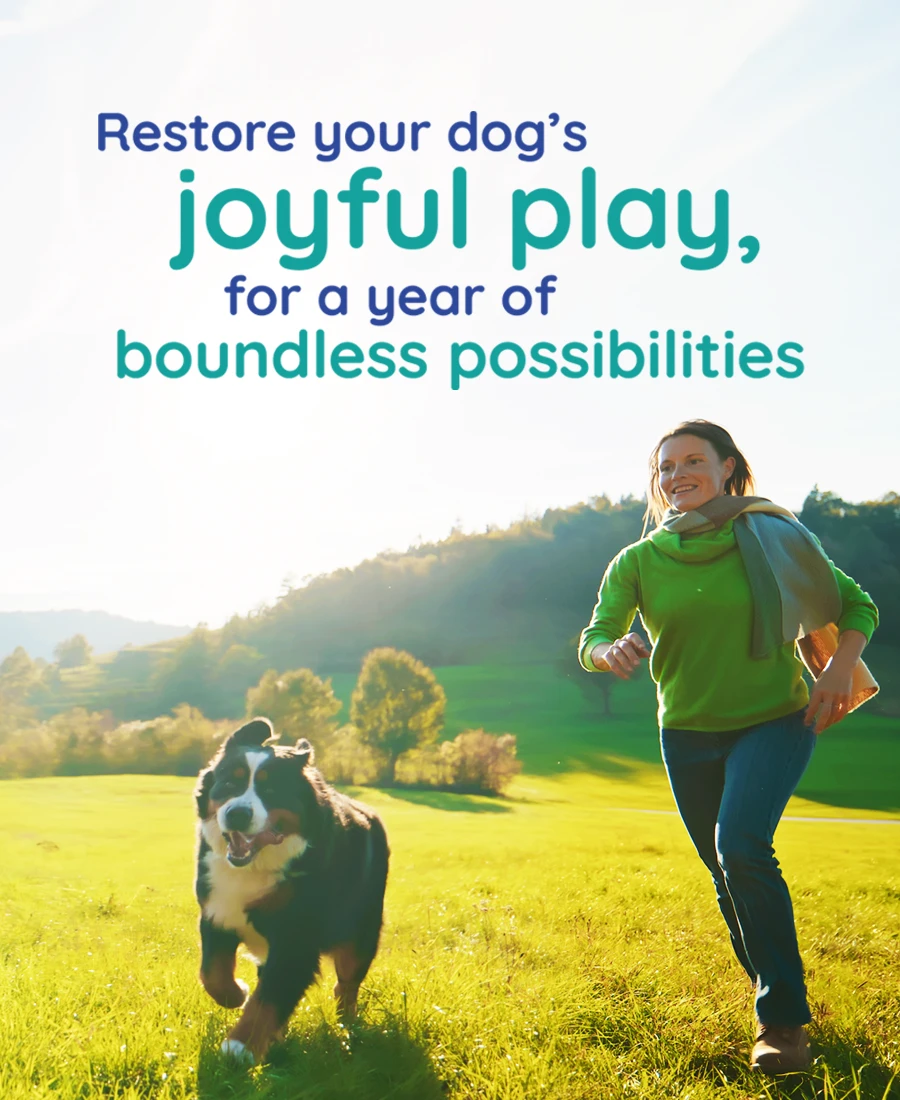

As pet owners, we go to great lengths to ensure our furry companions live healthy, comfortable lives. So, when a beloved dog begins to show signs of osteoarthritis (OA)—limping, difficulty getting up, reluctance to play—we want to do whatever we can to make them feel better and move more comfortably. And veterinarians are no exception in wanting to do the best thing for their own dogs.
Here’s the personal story of Murray, a Great Pyrenees/Anatolian Shepherd mix and his owner, Dr. Jennifer Fletcher Eckenrode, DVM, Certified Canine Rehabilitation Therapist (CCRT).
About Dr. Jennifer Fletcher Eckenrode
Dr. Eckenrode practices at Animal Hospital of Dauphin County in Harrisburg, PA. She earned her Doctor of Veterinary Medicine degree from Colorado State University and is a Certified Canine Rehabilitation Therapist (CCRT). Her special interests include pain management, musculoskeletal ultrasound, neurology, and targeted joint therapy. In her free time, she enjoys cooking, being active outdoors with her family, and spending time with Murray and her other dog, Parker, and 3 cats, Henry, Kyle, and Goose.
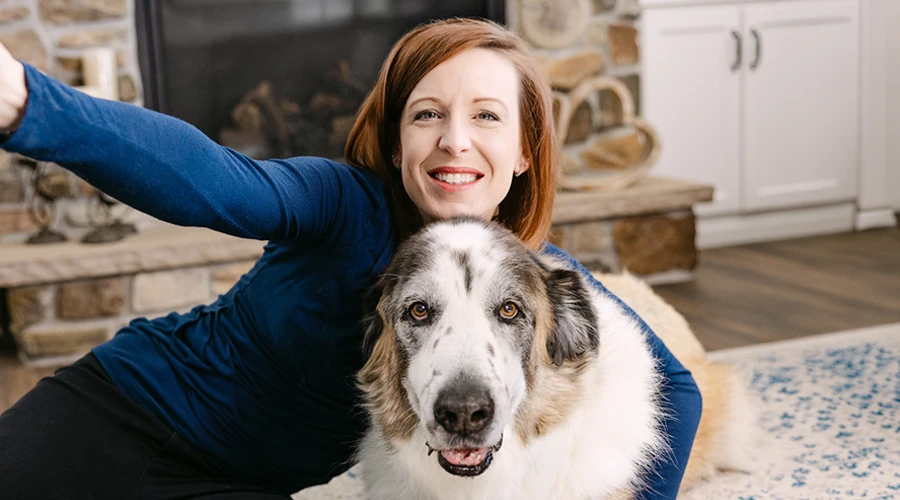
“Murray is 110 lbs of cuddly.”
“Outside he lives up to his breed’s reputation as a serious livestock guardian dog and is very protective of our home and kids. He’s got this hilarious vendetta against delivery trucks of any kind, so when he sees FedEx, UPS, or a Postal truck drive by, he’ll run the perimeter of our yard at full tilt, barking and chasing them off to keep his territory ‘safe.’ But once Murray comes inside, it’s a different story. He turns into a very goofy guy who just wants to be nuzzled, leaning his head right into you… what we call ‘Murray head presses.’
“We were looking for a rescue dog but weren’t intending on a giant breed like Murray.”
“We really thought we’d find a Labrador type of dog. But my husband was running a 5k race where the local shelter had a booth with dogs they hoped to find homes for. And there was Murray, with an ‘Adopt Me’ sign around his neck. That was that. We became giant breed owners.
Murray came from a poor situation and was a scrawny 97 pounds when we brought him home. But once we got him on a better nutritional plan, he put on about 20 pounds and his coat just bloomed into this gorgeous thickness. He really has become a beautiful dog who’s living his best life now with us, doing what he loves to do.
For example, a great day for Murray would be to start off on with a hike on the Appalachian Trail. For being so big, he really is a decent hiking dog. And then, he loves to spend the rest of the day hanging around in the backyard, making sure his house and family are protected. He changes his position every 15 minutes so he can survey his territory from a new spot. That’s just ingrained in him as a guardian dog.
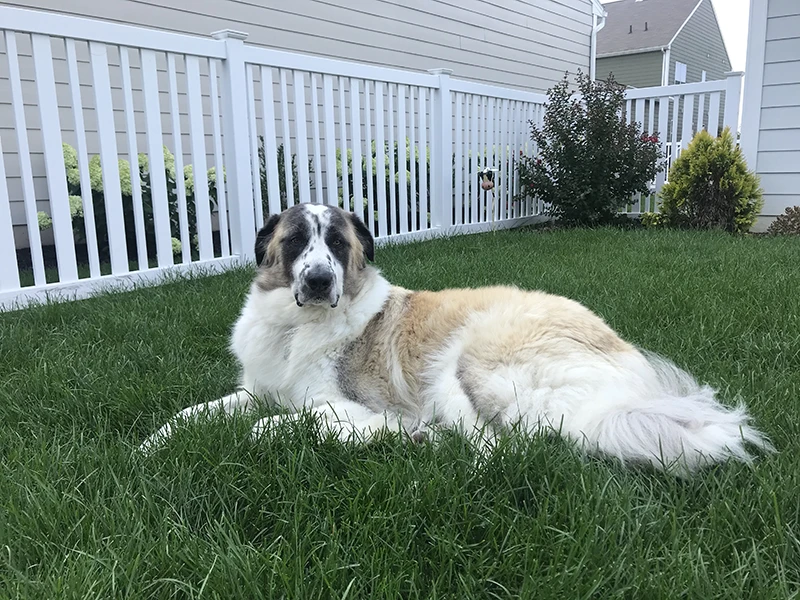
“When Murray was about 6, he started struggling to get up to change spots in the backyard.”
“At first, we told ourselves maybe he just overdid his patrolling, but we also noticed other changes. He just seemed sad. He stopped greeting us at the door and instead would just lie on his bed waiting for us to come to him. It was really hard to see, especially because we had another dog that was 5 years his senior who was running circles around him.
“So, I knew we needed to look deeper. I took him to the hospital where I practice and we got X-rays. When they came back, it was clear he had arthritis in his hips, and I just cried. My practice is almost exclusively rehab and pain management oriented, so I know all too well the toll arthritis can take on the quality of life of these animals… and at 6, Murray was still a relatively young dog. As much as I prefer not to treat my own pets… they are family, I don’t think of them as patients… I knew I was the one who needed to take charge of fixing him.
“I started him on NSAIDs for the pain, but after about 30 days I knew I had to think of something else. And I decided Synovetin OA would be the best option for him. Now, I had only previously treated elbows with it, but I’d had really great success in those cases. Because I see so many dogs with hip arthritis and a total hip replacement is outrageously expensive, I thought ‘let’s see how Murray does’ because Synovetin OA could be a valid option for owners of dogs with arthritis in their hips, too.
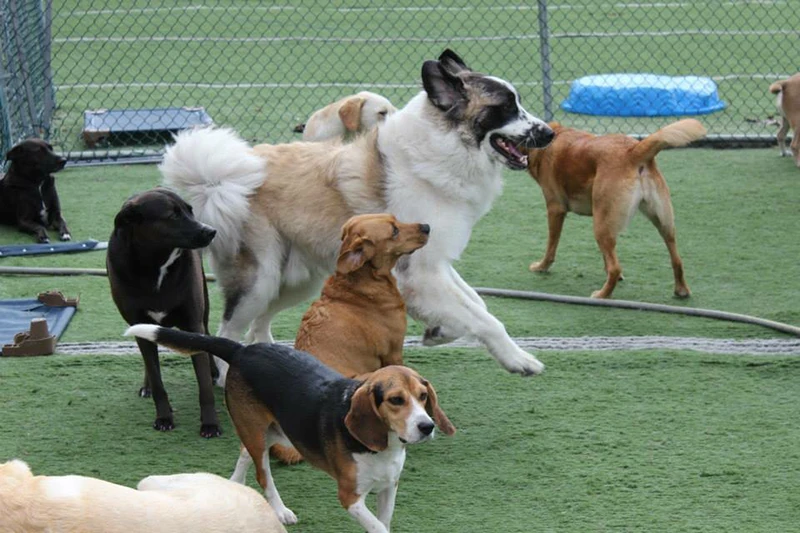
“It took about 4 weeks after the Synovetin OA injection and he was back to running around the backyard, popping up from his bed to greet us with his familiar happy barking when we would walk in the house, and playing with his pals at doggy daycare. And he was more in tune with being with us, wanting to be cuddled, wanting to get down on the floor with me when I’m working out and sitting on my lap… all 110 lbs of him!
“I discuss Murray’s success with Synovetin OA nearly every day with my owners.”
“I tell them I’m not willing to recommend anything I wouldn’t use with my own pet. I let them know I’ve been really happy with the results I’ve seen in Murray. When I tell owners that, I think our personal experience instills trust in this treatment decision.
“The number one thing I want owners to understand is that Synovetin OA is finally a treatment that is designed to get to the underlying problem in arthritis, which is inflammation. It actually is designed to address the inflammatory cells that cause cartilage damage and joint breakdown. We don’t have any other treatment on the market that can do that for us.
“As a veterinarian, I always want to treat the underlying cause, not just mask the symptoms. And with Synovetin OA, I can absolutely address what’s damaging that joint and try to reset the clock for a dog struggling with arthritis. In my opinion, it’s the best approach for getting the underlying problem taken care of so a treated dog can feel much better and move a lot more comfortably.
“For Murray and our family, Synovetin OA was a great option.”
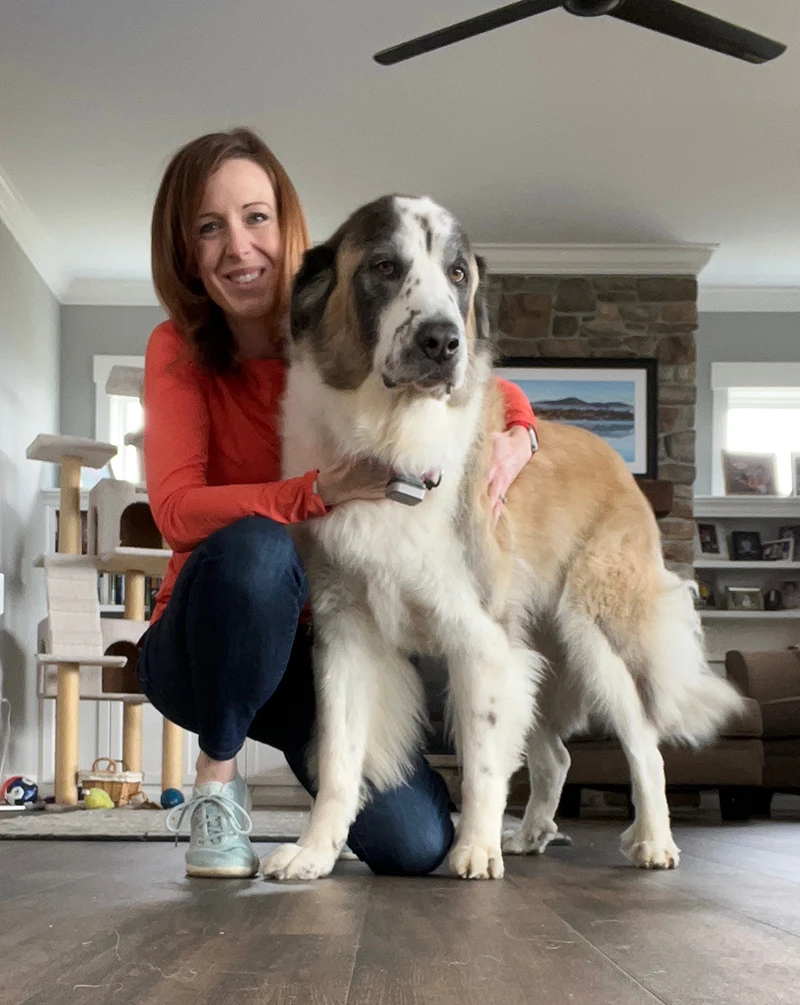
“I’ve treated Murray’s hips twice now. The first injection lasted about 20 months before I needed to give him another. He’s my cuddly, protective giant, and I’m so happy to have Synovetin OA to help keep him active and comfortable… and back on patrol chasing after those delivery trucks.”
Want to learn more about Synovetin OA for your dog? Find out how it works, what results from studies have shown, and find a treatment center near you here.