

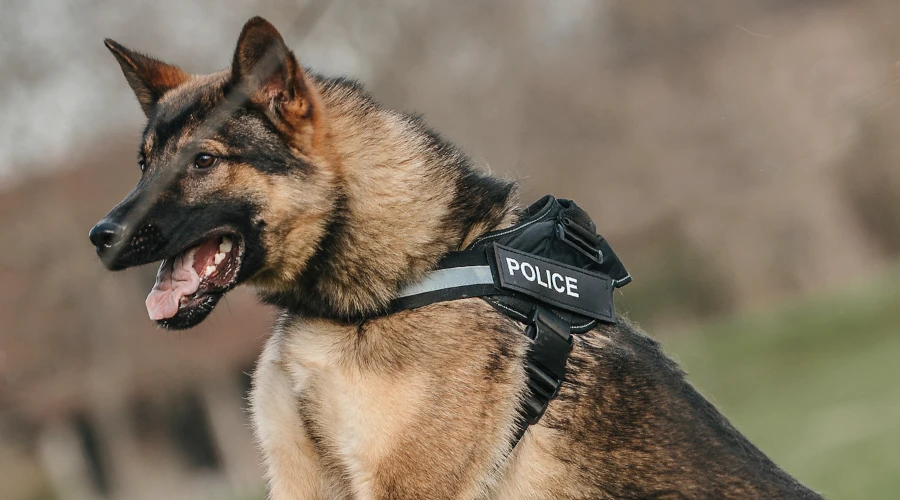
When canine heroes hurt: Treating arthritis in police dogs
Police service dogs, commonly referred to as K-9s, are remarkable partners—fast, loyal, intelligent, and courageous. Whether they’re tracking a missing person, sniffing out contraband, or protecting their handlers in dangerous situations, these dogs give their all for the communities they serve.
But just like human officers, police dogs are not immune to the wear and tear that comes with years of demanding work. One of the most common health issues affecting them is arthritis, a chronic joint condition that can impact their mobility, performance, and quality of life.
Read on to learn more about the underlying cause of arthritis, why police dogs are particularly at risk, how to recognize the signs, and what a newer treatment called Synovetin OA® can do to effectively manage the condition and help these essential working animals stay comfortable and active.
Arthritis is a progressive degenerative joint disease
Arthritis in dogs, also known as osteoarthritis or OA, doesn’t just affect old dogs. In fact, one study showed that around 40% of dogs aged 8 months to 4 years had arthritis in 1 or more joints. Sadly, many otherwise young, healthy dogs are not diagnosed or treated until the arthritis has progressed so much that it affects their quality of life. And, in the case of police dogs, that could mean far fewer years of service.
So, what actually causes arthritis to develop? It is a disease of inflammation in the tissues that enable joints to move comfortably. This inflammation causes degeneration of the cartilage that cushions the ends of bones within a joint. As inflammation causes cartilage to deteriorate, bones begin to rub together, causing the pain, swelling, and stiffness that leads to reduced mobility and can shorten the careers of these highly trained working partners.
Why police dogs are at particular risk for arthritis
While any dog can develop arthritis, police dogs are especially vulnerable due to the physical demands of their roles.
High-impact work. Police dogs routinely sprint, jump, wrestle, chase, and climb—activities that put significant stress on joints, especially hips, elbows, and knees. Over time, repetitive impact accelerates joint damage.
Early career stress. Many police dogs begin intense training as young animals, sometimes before their skeletal systems have fully matured. Excessive early stress on immature joints can predispose them to arthritis later on.
Heavy physical loads. Tasks like tugging on heavy equipment, restraining suspects, or working on rough terrain can repeatedly strain joints.
Breed predisposition. Some of the breeds commonly used in police work—like German Shepherds and Belgian Malinois—are genetically predisposed to joint abnormalities such as elbow and hip dysplasia, which increases arthritis risk.
Long service years. Police dogs often work into their senior years. The longer a dog remains active, the more cumulative stress its joints endure, increasing the likelihood of arthritis developing.
Early diagnosis and proactive treatment are essential
Arthritis can be insidious, and dogs are experts at disguising pain—especially working dogs that have been trained to push through discomfort. Given the extensive investment in training these dogs have had, handlers need to be vigilant in spotting early warning signs. The sooner arthritis is diagnosed, the better to keep these dogs comfortably assisting in important police work. Signs of arthritis to look for include:
- Lacking enthusiasm on the job, with slower starts, reluctance to run, jump, or climb stairs
- Showing signs of stiffness, especially after rest
- Shifting weight to avoid pressure on a sore joint
- Exhibiting changes in behavior, like grumpiness, withdrawal, or not wanting to be touched in certain areas
- Favoring a limb or occasional limping after work
- Having difficulty rising from a resting position
Because these signs can be subtle at first, regular physical exams by veterinarians familiar with the challenges to working dogs are essential.
How arthritis is diagnosed in the working K9
When a handler suspects arthritis, a thorough evaluation is necessary. This typically includes a physical examination to assess gait, joint range of motion, swelling, heat, and pain response. The veterinarian will also want to understand the dog’s medical history, including the type of training, any past injuries, and daily work demands.
X-rays are often used to visualize what is going on inside the joint, and to identify any degeneration, bone spurs, and other structural changes. In some cases, advanced imaging (like MRI or CT) may be recommended. Veterinarians also use specific pain-scoring systems to evaluate the dog’s discomfort level and monitor progress over time.
Treatment can help keep police dogs on active duty
While arthritis cannot be cured, it can be managed effectively—especially when addressed early. Pain medications in the form of pills and chews are commonly used to treat arthritis, but they do come with risks, especially with long term use. That’s because they have to go through a dog’s whole body to treat joint pain, so the stomach, kidneys, and liver are all exposed to the drug.
Joint supplements, like glucosamine, chondroitin sulfate, and omega-3 fatty acids, are other commonly used treatments to help support joint health. Some additional options include anti-NGF injections that mask nerve pain, platelet-rich plasma (PRP), and stem cell treatments.
All of these approaches work to help reduce the pain of arthritis, but they don’t go deeper to effectively address the actual cause of the disease—inflammation within the joint.
A novel, inflammation forward treatment that’s well suited for working dogs like K-9s
Synovetin OA is a newer treatment that is designed to target the inflammation inside the joint. It is given as a quick, simple injection directly into the inflamed joint. Once there, the active component, tin-117m, targets and safely deactivates the harmful inflammatory cells that cause arthritis pain and progression. This results in effective and long-lasting pain relief which helps to preserve the health of the joint.
While Synovetin OA is the only dog arthritis treatment that uses this approach, it’s same type of treatment that’s been safely and effectively used to treat arthritis in people around the world for decades.
The effectiveness of Synovetin OA has been proven in several clinical studies. The main ingredient is only active for a few weeks, but the effect on the inflammation causing dog joint pain is very long-lasting—up to 1 full year of relief with just 1 treatment. 70% to 90% of the dogs in these studies experienced pain relief and regained their mobility based on both veterinarian and pet owner evaluations.
The safety of Synovetin OA has also been extensively investigated in numerous studies. Both the researchers and the owners of the treated dogs reported that Synovetin OA had no systemic side effects or significant safety issues.
Synovetin OA is recommended by many specialists who have experience treating working police dogs
Arthritis is a common but serious condition in K9s that can diminish their quality of life and work performance if not properly addressed as soon as possible. With early recognition, veterinary support, and thoughtful management with advanced treatment like Synovetin OA, many police dogs can continue to work comfortably for years.
These dogs give courage, loyalty, and service to protect our communities. It’s our responsibility—as handlers, veterinarians, departments, and supporters—to give them the care they need to stay pain-free and active, both on duty and later in their retirement years.